Benjamin V. Rackham, PhD

Stellar Astrophysics  |  Exoplanet Science  |  Space Missions

I lead a research program at the intersection of stellar astrophysics and exoplanet atmospheric characterization, developing the foundations needed to separate stellar and planetary signals in transmission spectra. My group combines space-based spectroscopy (HST, JWST, Pandora) with new modeling and data-driven methods to constrain stellar photospheres and enable robust atmospheric inference for small exoplanets.

Mission & Program Leadership

  • Principal Investigator, HST Stellar Treausure Trove Legacy Archival Program (HST AR 17551)
  • Principal Investigator, Eyes on the Stars Legacy Archival Program (JWST AR 5370)
  • Stars Science Working Group Lead, NASA’s Pandora SmallSat Mission
  • Target Characterization Working Group Lead, SPECULOOS Science Team
  • Core Team Member, Nautilus Science Team

About

I am a Research Scientist at MIT in the Disruptive Planets group. I earned my PhD in Astronomy & Astrophysics at the University of Arizona before joining MIT as a 51 Pegasi b Fellow.

Before astronomy, I studied neuroscience at Westminster University and worked as a field biologist in Utah and Arizona.
Research

Knowing Stars, Knowing Planets: My research bridges stellar astrophysics, exoplanet discovery, and atmospheric characterization, with a focus on understanding and correcting the imprint of stellar photospheres on exoplanet transmission spectra. The most accessible rocky planets orbit nearby K and M dwarfs — but extracting reliable atmospheric signals from these systems requires precisely understanding the stars themselves. I develop the theoretical framework, observational strategies, and mission-scale programs needed to separate stellar and planetary signals in transmission spectroscopy.

Together, these efforts connect exoplanet discovery, stellar physics, atmospheric characterization, and mission design — building the methodological foundation required to interpret biosignature searches in the coming decades.

Discovering and Prioritizing Nearby Small Worlds

The most promising rocky exoplanets for atmospheric characterization orbit nearby M dwarfs. I contribute to discovery and follow-up efforts in SPECULOOS and TESS, with an emphasis on identifying systems that will define the JWST era.

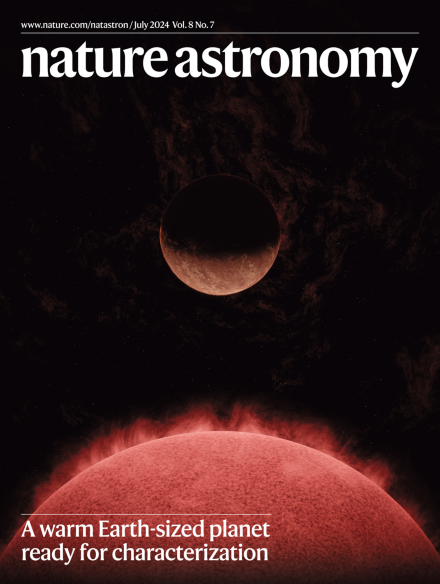
SPECULOOS-3b Nature Astronomy cover
Nearby M-dwarf systems like SPECULOOS-3b (Gillon, Pedersen, Rackham et al. 2024, Nature Astronomy) — an Earth-sized planet transiting an ultracool dwarf at 16.8 pc — provide our strongest near-term opportunities to characterize rocky exoplanets before the Habitable Worlds Observatory era. Image Credit: Lionel Garcia.

The Transit Light Source Effect

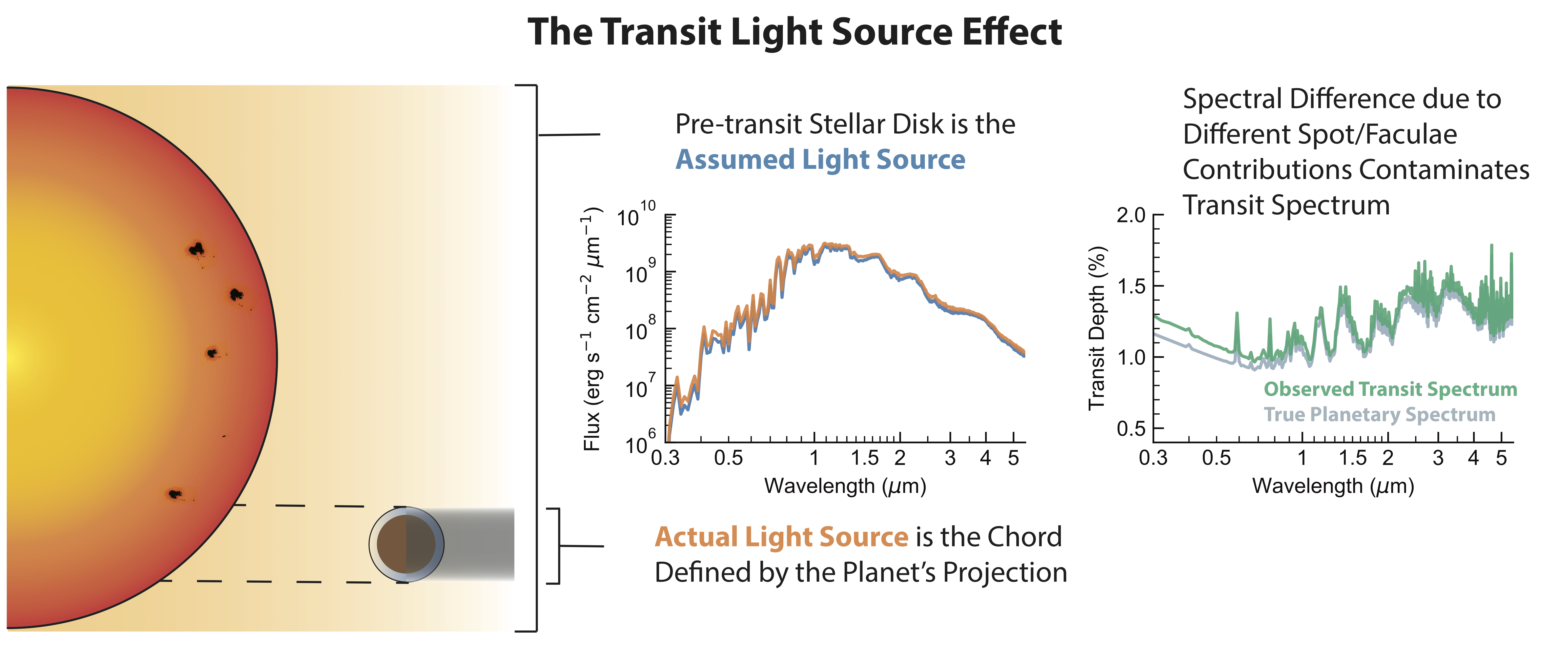
During my PhD, I established the modern theoretical framework for the transit light source (TLS) effect (Rackham et al. 2018, 2019), showing that unocculted starspots and faculae can imprint spectral signals comparable to — or larger than — planetary atmospheric features in transmission spectra. This work established that stellar contamination is a dominant systematic for M-dwarf planets and many active K dwarfs. The framework we presented now underpins interpretation strategies for precise transmission spectroscopy with HST and JWST.

Transit Light Source Effect schematic
The assumed pre-transit stellar disk differs from the actual light source defined by the planet's transit chord, imprinting spectral features onto the measured transmission spectrum (Rackham et al. 2018).

Space-Based Stellar Characterization

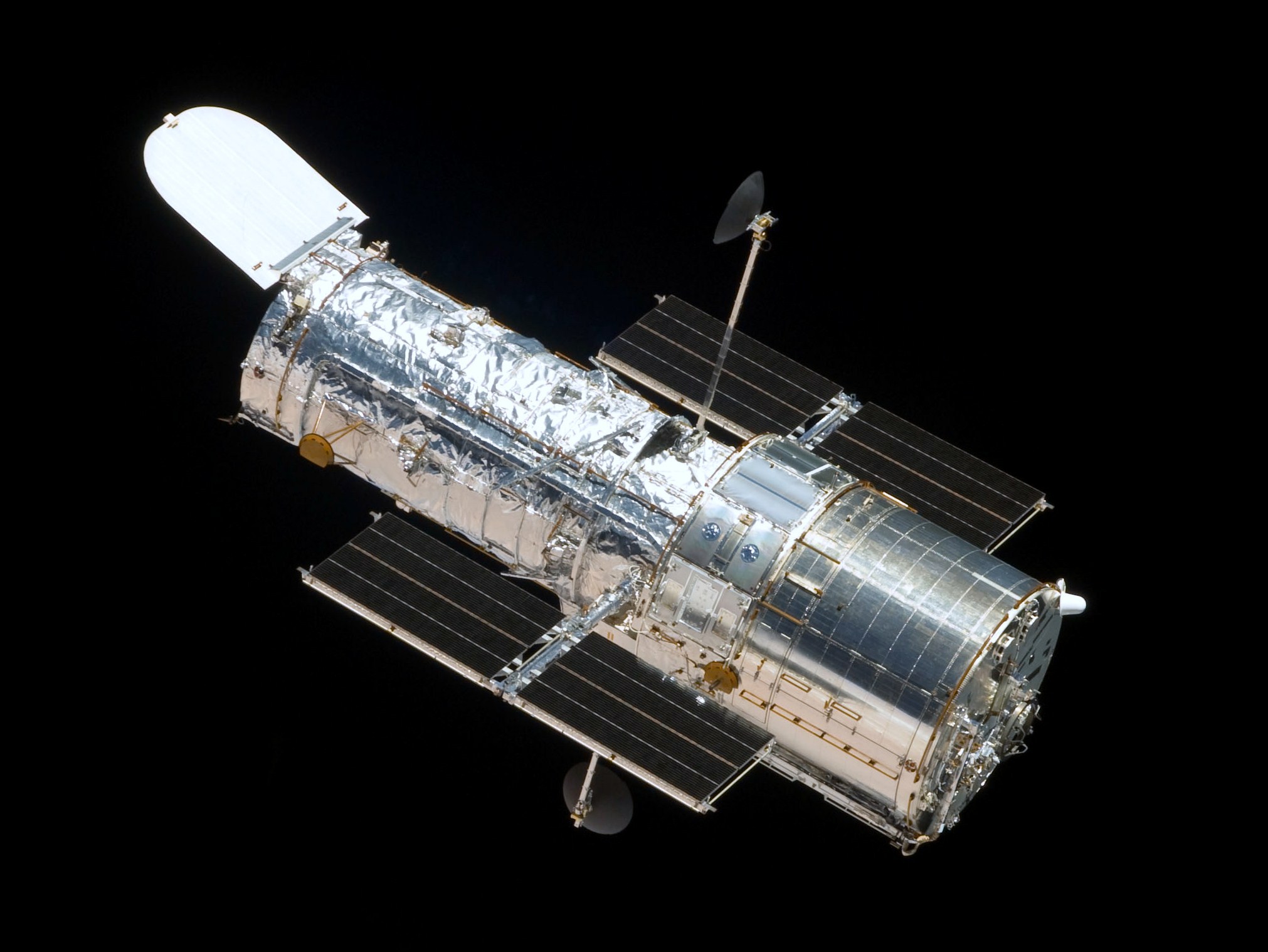

To move toward practical correction strategies, I lead large-scale archival programs that are focused on infer stellar photospheric properties from space-based transit observations.

These programs are uniformly re-analyzing dozens of archival transit observations from HST and JWST to build Legacy Libraries of time-dependent stellar heterogeneity constraints and contamination-corrected transmission spectra.

HST
JWST

The Pandora SmallSat Mission

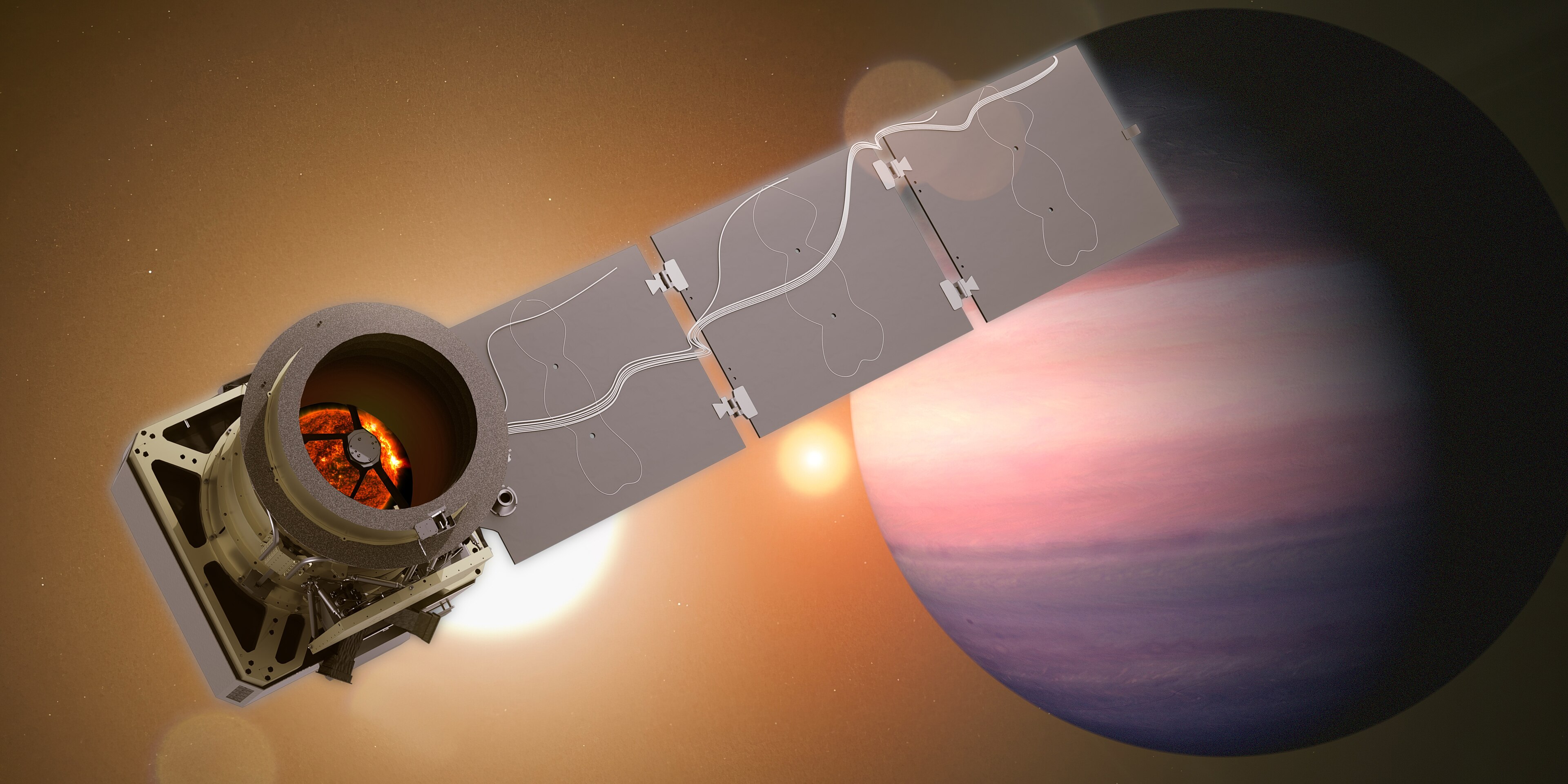
I serve as the Stars Science Working Group Lead for NASA’s Pandora SmallSat Mission, a Pioneers-class mission specifically designed to address stellar contamination in exoplanet spectroscopy.

Having launched in January 2026, Pandora will obtain repeated, simultaneous visible and near-infrared time-series observations of transiting exoplanets orbiting active K and M dwarfs with long time baselines, enabling precise constraints on stellar photospheric properties at the time of planetary transits. This dedicated mission strategy will provide critical insights for quantifying stellar heterogeneity and its imprint on exoplanet transmission spectra.

Pandora SmallSat Mission
NASA's Pandora SmallSat Mission, designed to address stellar contamination in exoplanet spectroscopy. Image Credit: NASA Goddard Space Flight Center.

The Nautilus Space Observatory

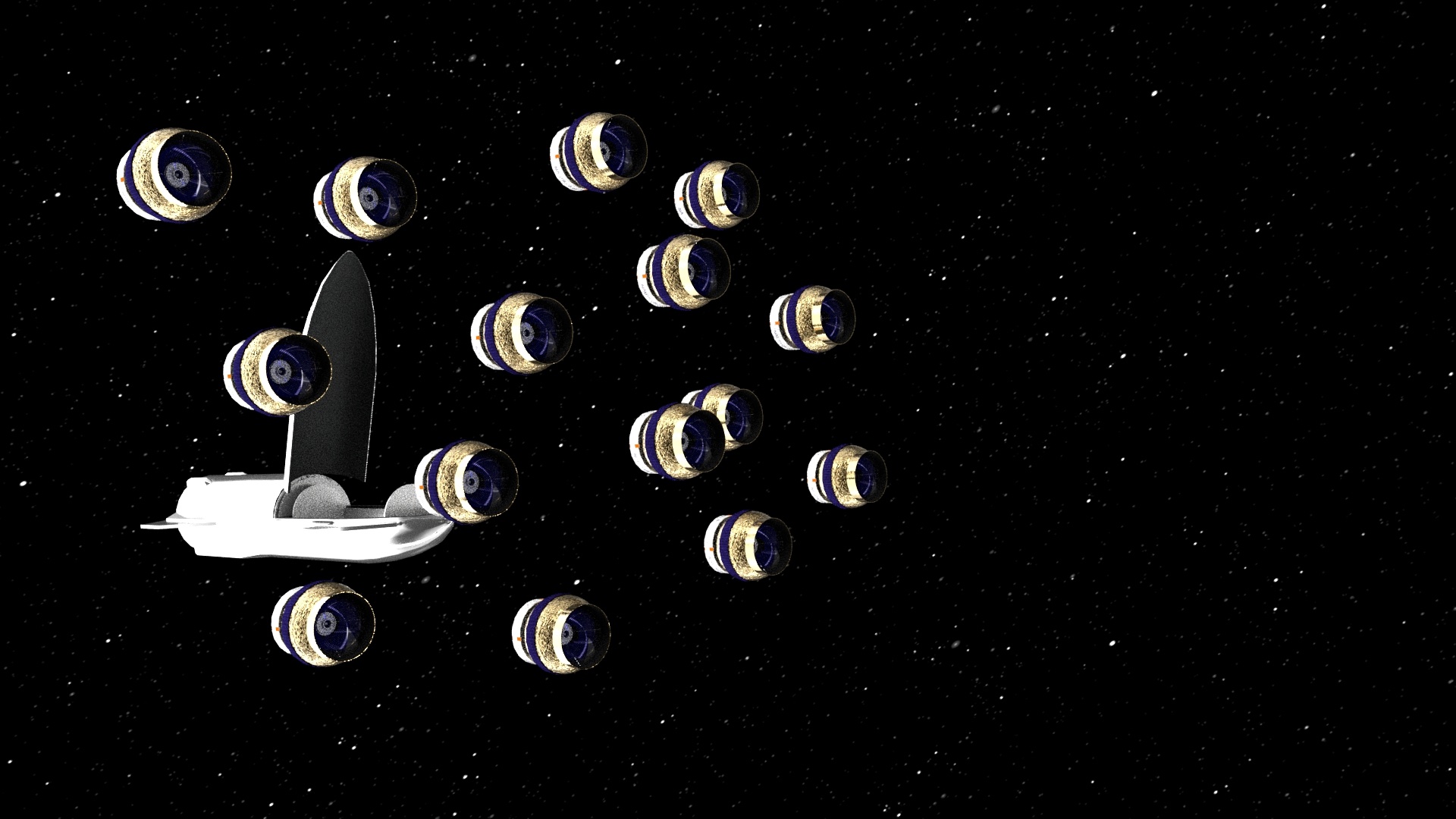
I am a core science team member for the Nautilus Space Observatory, a mission concept designed to scale atmospheric characterization to large samples of transiting exoplanets with a constellation of spacecraft utlizing large-aperture, low-cost, replicable optics.

My work contributes to defining the stellar science requirements and contamination-mitigation strategies needed for future flagship-scale atmospheric surveys.

Nautilus Space Observatory
The Nautilus Space Observatory concept.

Publications

I have authored more than 100 publications to date, including 6 as first author. ADS libraries summarizing my publication record are available below.

Selected papers

  • Rackham et al. (2017). ACCESS I: An Optical Transmission Spectrum of GJ 1214b Reveals a Heterogeneous Stellar Photosphere. ADS
  • Rackham, Apai, & Giampapa (2018). The Transit Light Source Effect: False Spectral Features and Incorrect Densities for M-dwarf Transiting Planets. ADS
  • Rackham, Apai, & Giampapa (2019). The Transit Light Source Effect II: The Impact of Stellar Heterogeneity on Transmission Spectra of Planets Orbiting Broadly Sun-like Stars. ADS
  • Kirk, Rackham et al. (2021). ACCESS & LRG-BEASTS: A Precise New Optical Transmission Spectrum of the Ultrahot Jupiter WASP-103b. ADS
  • Rackham et al. (2023). The effect of stellar contamination on low-resolution transmission spectroscopy: needs identified by NASA’s Exoplanet Exploration Program Study Analysis Group 21. ADS
  • Rackham & de Wit (2024). Towards robust corrections for stellar contamination in JWST exoplanet transmission spectra. ADS
  • Gillon, Pedersen, Rackham et al. (2024). An Earth-sized exoplanet ripe for emission spectroscopy with JWST in orbit around a nearby ultracool dwarf star. ADS
  • Davoudi, Rackham et al. (2025). Gravity-sensitive Spectral Indices in Ultracool Dwarfs: Investigating Correlations with Metallicity and Planet Occurrence using SpeX and FIRE Observations. ADS
  • Rackham et al. (2026). NASA’s Pandora SmallSat Mission: Simulating the Impact of Stellar Photospheric Heterogeneity and Its Correction. Submitted to AAS Journals.

Teaching & Mentoring

Teaching and mentoring are central to my professional identity. I aim to help students become confident, flexible scientific thinkers who use quantitative, evidence-based reasoning and clear communication to interpret data and solve problems collaboratively. I emphasize evidence-informed practices (active learning, formative assessment, and computational apprenticeship) and design learning experiences that connect core physical principles to active research frontiers.

Teaching

At MIT, I developed and delivered modules for 12.425/12.625 (Extrasolar Planets) and 12.420/12.601 (Physics & Chemistry of the Solar System), including Jupyter-notebook-based labs using real JWST data. I have also guest lectured in astrobiology at Westminster University and taught large-enrollment astronomy courses at the University of Arizona.

Mentoring

My mentoring approach emphasizes scaffolded skill development, transparent expectations, and building a supportive research-group culture. I have mentored undergraduate researchers, graduate students, and postdocs on projects spanning stellar spectroscopy, transmission spectra, and mission science, with 14 advisee-led publications to date.

Leadership & Service

I contribute to the exoplanet community through mission leadership, community synthesis, open tools, and workshops that bring together stellar, exoplanet, and instrumentation communities.

Programs & Missions

  • Principal Investigator, HST Stellar Treausure Trove Legacy Archival Program (HST AR 17551)
  • Principal Investigator, Eyes on the Stars Legacy Archival Program (JWST AR 5370)
  • Stars Science Working Group Lead, NASA’s Pandora SmallSat Mission
  • Target Characterization Working Group Lead, SPECULOOS Science Team
  • Core Team Member, Nautilus Science Team

Community Synthesis

Co-led NASA ExoPAG Study Analysis Group 21, convening >100 scientists to identify priorities for addressing stellar contamination in precise transmission spectroscopy. Our final report was published as an Invited Review in RASTI (Rackham et al. 2023).

Workshops & Collaboration

Organizer and co-organizer of focused workshops and meetings on exoplanet science, stellar contamination, and JWST exoplanet observations, designed to accelerate progress through shared methods and open resources.

Open-Source Software

I develop and maintain open-source tools that support reproducible stellar and exoplanet spectroscopy, with an emphasis on practical utilities for working with model spectral libraries and time-domain stellar signals.

speclib

Tools for working with stellar spectral libraries. GitHub | Docs

spotter

Approximate forward models of fluxes and spectral time-series of non-uniform stars. GitHub | Docs | JOSS

    Contact

  • Address

    Massachusetts Institute of Technology
    77 Massachusetts Ave 54-1726
    Cambridge, MA 02139 USA
  • Email

    brackhamREMOVE@mit.edu
  • Social